
A Window Into Old Hawaii
Most of the Road to Hana is about nature. The Keanae Peninsula is about culture. This small finger of land juts out into the ocean from the rainforest, and it holds onto a way of life that has mostly faded elsewhere on Maui. Taro still grows in flooded fields, a lava rock church still stands, and the surf still pounds the black coast just as it has for centuries. Stepping onto Keanae feels like stepping back in time, and that is exactly what makes it special.
Where Keanae Is
The Keanae Peninsula sits about midway along the Road to Hana, near mile marker 16, on a short detour down Keanae Road off the main highway. It is easy to drive right past the turn, so keep an eye out for it. The road down to the peninsula is brief, and within a few minutes you trade the jungle for open ocean views, taro patches, and the quiet of a small Hawaiian community. It is a low key stop, and that quiet is the whole point.
The Taro Fields and Hawaiian Tradition
The flat green fields you see on the peninsula are loi, the flooded patches where Hawaiians grow taro, or kalo. Taro is one of the most important plants in Hawaiian culture, both as a food and as a symbol of family and ancestry. Families here still farm these fields by hand, much as their ancestors did, which makes Keanae a living piece of Hawaiian heritage rather than a museum. Admire the fields from the road and the public areas, and remember that they are someone’s working farm and family land.
The Historic Stone Church
One of the most photographed sights on the peninsula is the old lava rock church, built in the 1860s from chunks of lava and coral. Its dark stone walls and simple white trim stand against the green lawn and palm trees, and it is still a place of worship for the community. The church famously survived a devastating 1946 tsunami that swept through the village, a story that locals still carry with them. Visit quietly, take your photos from a respectful distance, and remember it is a sacred place, not a backdrop.
The Dramatic Lava Coastline
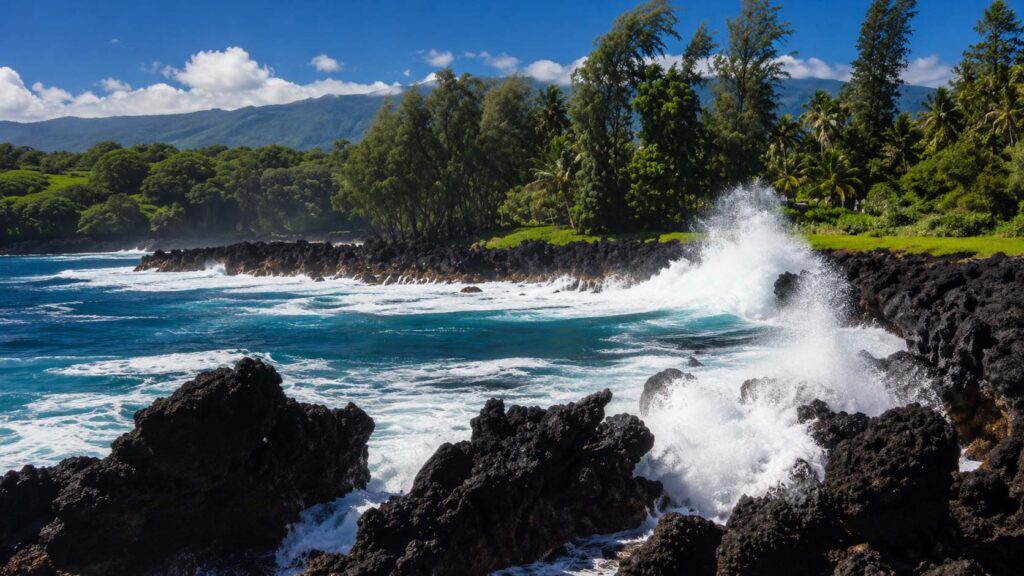
The edge of the peninsula is raw and wild. Black lava rock meets the open ocean here, and the waves crash and explode against the jagged shore in bursts of white spray. It is a powerful, beautiful scene, and a favorite for photographers. It is also not a place to swim or climb out onto the rocks. The surf is strong, the lava is sharp and slick, and rogue waves can sweep over low areas without warning. Enjoy the show from a safe distance back from the water.
Famous Banana Bread
Keanae is also home to one of the most beloved banana bread stands on the whole drive. Warm, fresh, and a little sweet, a loaf from here is a Road to Hana tradition that travelers plan their day around. It is the perfect snack to enjoy with an ocean view before you head back up to the highway. Bring a little cash, since stands like this often do not take cards, and the bread is best eaten while it is still warm.
Parking and Restrooms
Keanae is a small place, so do not expect a big visitor center. There are modest parking areas near the church and down by Keanae Landing, and they can fill up when a few cars or a tour arrive together. Park only in marked spots, keep the narrow roads clear, and never pull into private driveways or the edges of the taro fields. There are basic public restrooms near the landing area, which makes Keanae a handy midpoint break on the long drive. As with everything here, treat the facilities and the community with care.
Visit With Respect
More than almost any other stop, Keanae asks visitors to slow down and be respectful. Real families live, farm, and worship here, and the peninsula is not a theme park. Stay in public areas, do not walk into the fields or yards, keep your voice down, and take every bit of trash with you. A warm smile and a light footprint go a long way. The reward for that respect is a genuine glimpse of old Hawaii that few places can still offer.
See It With a Local Guide
The Keanae Peninsula is a stop where context makes all the difference, and that is where a guide shines. On our guided Road to Hana tours, your driver-guide shares the history of the taro fields, the church, and the 1946 tsunami, so the place comes alive with meaning instead of being just another pretty view. Keanae is a featured stop on our flagship tour, and seeing it through the eyes of someone who knows its stories turns a quick photo break into a highlight of the day.
A Stop That Stays With You
The Keanae Peninsula is the soul of the Road to Hana. Taro fields, a historic stone church, a wild lava coast, and warm banana bread come together in a place that still lives by old Hawaiian rhythms. Park with care, find the restrooms near the landing, watch the surf from a safe distance, and above all visit with respect. Keanae rewards travelers who slow down with one of the most authentic experiences on all of Maui.